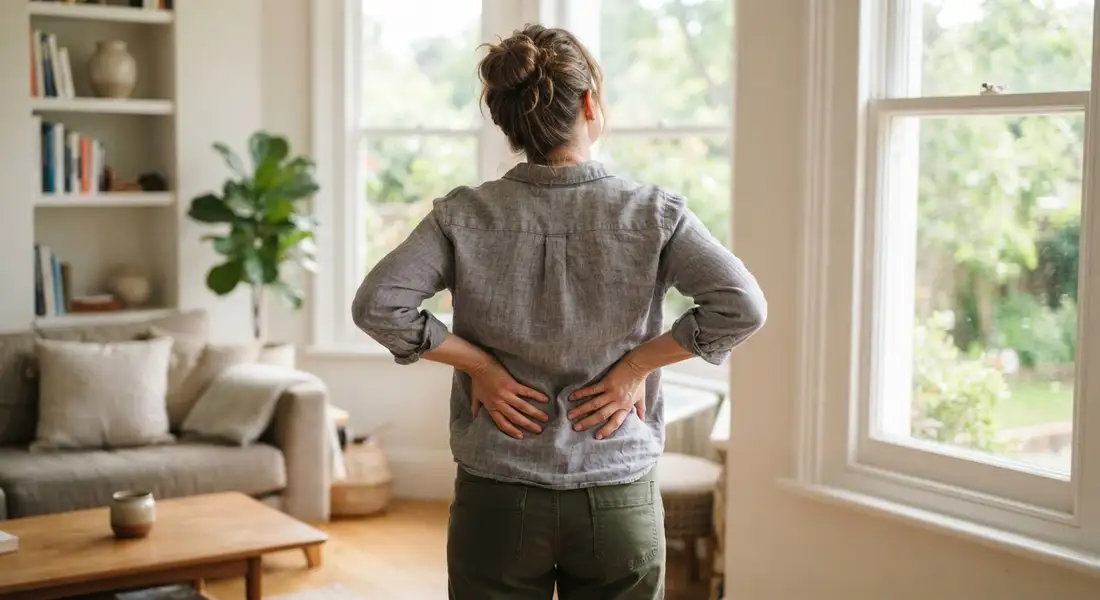
Quick answer: Sciatica is pain, weakness, numbness or tingling in the leg caused by injury to or pressure on the sciatic nerve. MedlinePlus says “Sciatica is a symptom of a medical problem,” often a herniated disk or spinal stenosis. Self-care usually means ice then heat, no bed rest, and gentle activity. Get care right away for loss of bladder or bowel control, or new weakness or numbness in the legs or pelvis.
What is sciatica?
The MedlinePlus sciatica article describes sciatica as pain, weakness, numbness or tingling in the leg caused by injury to or pressure on the sciatic nerve. The sciatic nerve starts in the lower back and runs down the back of each leg.
The key point is that sciatica is a symptom, not a diagnosis on its own. People often call it a “pinched nerve,” which is a fair everyday description: something is pressing on or irritating the nerve, and the leg feels it. The useful question is what is doing the pressing.
What causes sciatica?
MedlinePlus lists several causes, including:
- A slipped or herniated disk
- Spinal stenosis
- Piriformis syndrome, which MedlinePlus describes as a pain disorder involving the narrow muscle in the buttocks
- A pelvic injury or fracture
- Spondylolisthesis
- Tumors
MedlinePlus also notes that men between ages 30 and 50 are more likely to have sciatica. Most of these causes are mechanical, but a few need a medical workup, which is why an exam matters if the pattern of pain is unusual.
What does sciatica feel like?
According to MedlinePlus, sciatica can range from mild tingling or a dull ache to pain severe enough to make it hard to move. It usually affects one side. The leg may feel weak, and pain may get worse:
- After standing or sitting
- When you sneeze, cough or laugh
- When bending backward or walking more than a few yards
- When straining or holding your breath
If your pain stays in the low back and does not travel into the leg, our post on low back pain and when to get it checked may be a better fit.
What helps with sciatica at home?
MedlinePlus gives a fairly simple self-care plan:
- Over-the-counter pain relievers such as ibuprofen or acetaminophen may help.
- Use ice for the first 48 to 72 hours, then use heat.
- Bed rest is not recommended.
- Start back exercises early and return to normal activities slowly.
- Avoid heavy lifting or twisting for the first 6 weeks after the pain starts.
MedlinePlus also says sciatica often gets better on its own, but it is common for it to return. For prevention, it suggests avoiding long periods of sitting or lying with pressure on the buttocks, and notes that strong back and abdominal muscles are important.
The MedlinePlus acute low back pain article adds that sleeping curled up with a pillow between your legs, or with a pillow under your knees if you sleep on your back, can ease strain.
How is sciatica treated?
MedlinePlus says treatment focuses on the cause and is usually conservative. Options can include physical therapy, injections to reduce swelling around the nerve, and medicines for nerve pain. Surgery is generally saved for cases that do not respond to other treatment.
| Approach | What it involves | Notes from the sources |
|---|---|---|
| Self-care | Ice then heat, pain relievers, gentle activity | MedlinePlus advises against bed rest |
| Exercise and physical therapy | Guided movement and strengthening | MedlinePlus lists physical therapy as an option |
| Spinal manipulation | Controlled thrust to a spinal joint | NCCIH says most are done by chiropractors |
| Injections or nerve-pain medicines | Given by a medical provider | MedlinePlus lists both as options |
| Surgery | Relieves pressure on the nerve | Generally a last resort, per MedlinePlus |
The National Center for Complementary and Integrative Health, part of NIH, explains that spinal manipulation applies “a controlled thrust to a joint of your spine” and that “Most spinal manipulations are done by chiropractors.” NCCIH says short-term side effects like increased pain, stiffness or headache are common and usually fade within 24 hours, and serious effects are rare.
When should you get sciatica checked right away?
MedlinePlus lists signs that mean you should contact a provider right away:
- Unexplained fever with back pain, or back pain after a severe blow or fall
- Redness or swelling on the back or spine
- Pain that travels below the knee
- Weakness or numbness in the buttocks, thigh, leg or pelvis
- Burning with urination or blood in the urine
- Pain that is worse when lying down or wakes you up at night
- Severe pain you cannot get comfortable with
- Loss of control of urine or stool
When to get emergency care: Sudden loss of bladder or bowel control, or new weakness in the legs, should not wait for a routine visit. Call 911 or go to the nearest emergency department. A chiropractic office is not the place for emergency care.
MedlinePlus also says to contact a provider if you have unintentional weight loss, use steroids or inject drugs, your pain feels different or worse than earlier episodes, or an episode lasts more than 4 weeks.
How does Aguilera Health & Wellness Center approach sciatica?
At Aguilera Health & Wellness Center in Bakersfield, Dr. Frank J. Aguilera starts with a history and exam to look for where the leg symptoms may be coming from, and the office offers X-rays when they are appropriate. Depending on what the exam shows, care may include chiropractic adjustments, spinal decompression, massage therapy or infrared light treatment. Results vary from person to person, and no outcome is guaranteed.
You can learn more about the practice’s back, neck and sciatica care or see the office’s Bakersfield chiropractic page. Spanish is spoken at the office.
Leg pain that will not settle?
If pain, tingling or numbness keeps running down your leg, call Aguilera Health & Wellness Center at (661) 833-1111 or use the contact page to reach the office. For any emergency sign above, call 911 first.